Case study
Agentic AI Platform
Governed AI execution control plane for enterprise workflows.
Most AI demos work until tools fail, approvals appear, or a run needs to be replayed. This project treats those concerns as first-class execution semantics.
What this is / is not
This is
- Governed execution platform
- Deterministic orchestration runtime
- Policy-aware tool execution system
- Replayable AI workflow platform
- Local Docker demo with fake model provider by default
This is not
- Chatbot or conversational shell
- Prompt wrapper
- LangChain/LangGraph execution demo
- Production Kubernetes deployment
- Autonomous self-modifying agent
Problem
- Agent demos often collapse around retries, partial failures, approvals, and audit questions—not only model quality.
- Prompts and chains do not substitute for execution semantics: state, policy gates, tool contracts, and durable traces.
- Enterprise workflows need reconstructable runs, explicit policy evaluation, and operator tooling over stored artifacts.
Architecture
Operator-console and API clients call api-gateway only. The gateway forwards to orchestrator, which coordinates policy-engine, tool-runtime, knowledge-service, and model-runtime. Feedback-service, mukti-agent, and evaluation-engine consume completed work. PostgreSQL backs persistence in the default compose stack.
| Service | Role |
|---|---|
| api-gateway | HTTP ingress, RBAC, SSE, stable /v1 surface |
| orchestrator | Execution lifecycle, plans, steps, validation, replay scheduling |
| policy-engine | Allow / deny / conditional evaluation before side effects |
| tool-runtime | Registered tools only; auditable tool calls |
| knowledge-service | Retrieval and evidence for workflow steps |
| model-runtime | Structured model client (fake provider default in demo) |
| feedback-service | Operator and Mukti persistence |
| mukti-agent | Post-execution advisory analysis over traces |
| evaluation-engine | Metrics aggregates and replay-diff projections |
| operator-console | Angular UI over gateway—executions, trace, replay, policies |
Stack: Python services (orchestrator, policy, tools, knowledge, model, feedback, Mukti, evaluation) · FastAPI api-gateway · Angular operator-console · PostgreSQL · Docker Compose local stack
Core capabilities
Deterministic execution lifecycle
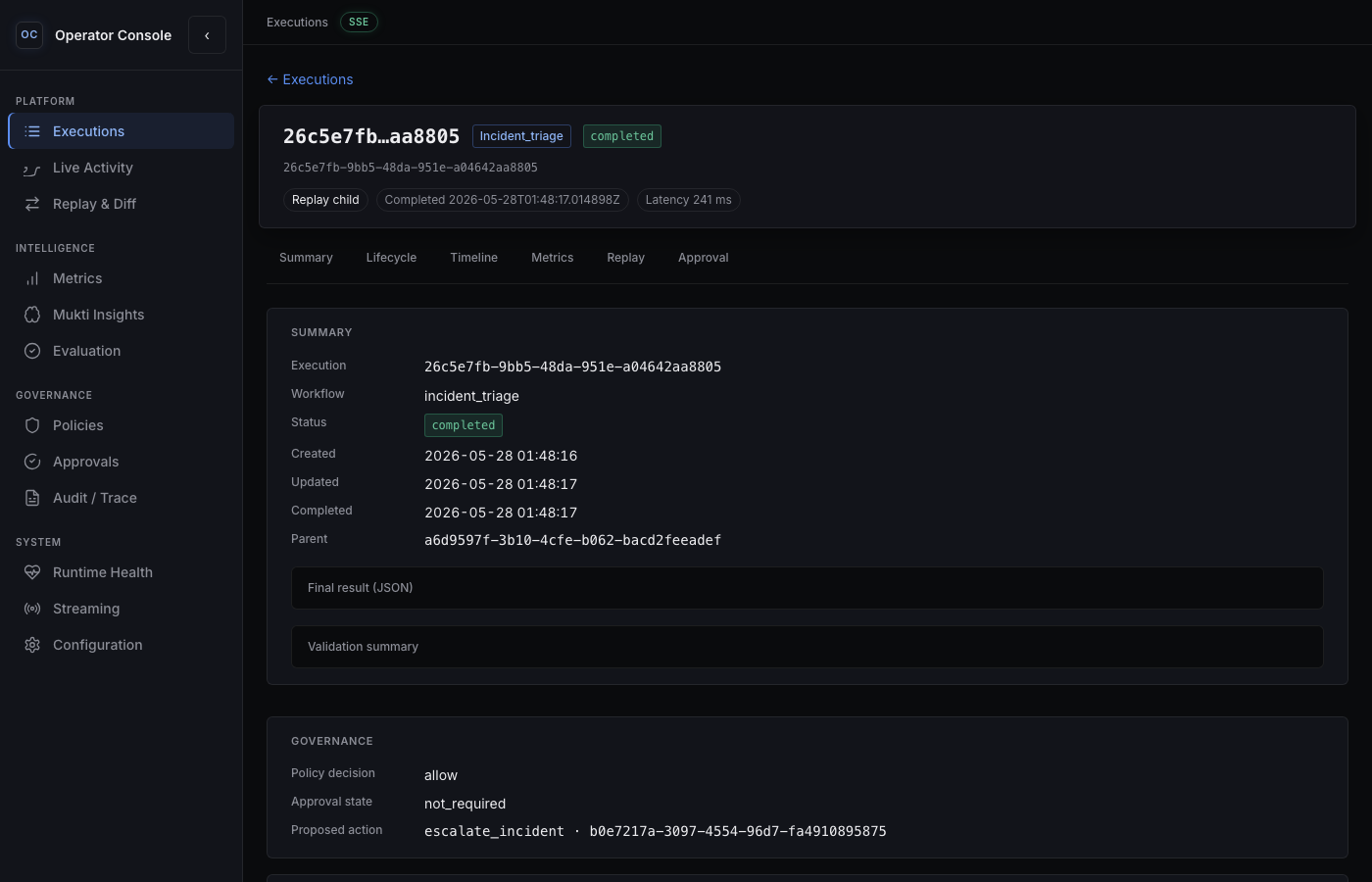
Step-based plans with explicit state transitions, validation gates, and terminal outcomes owned by the orchestrator.
Policy and approvals
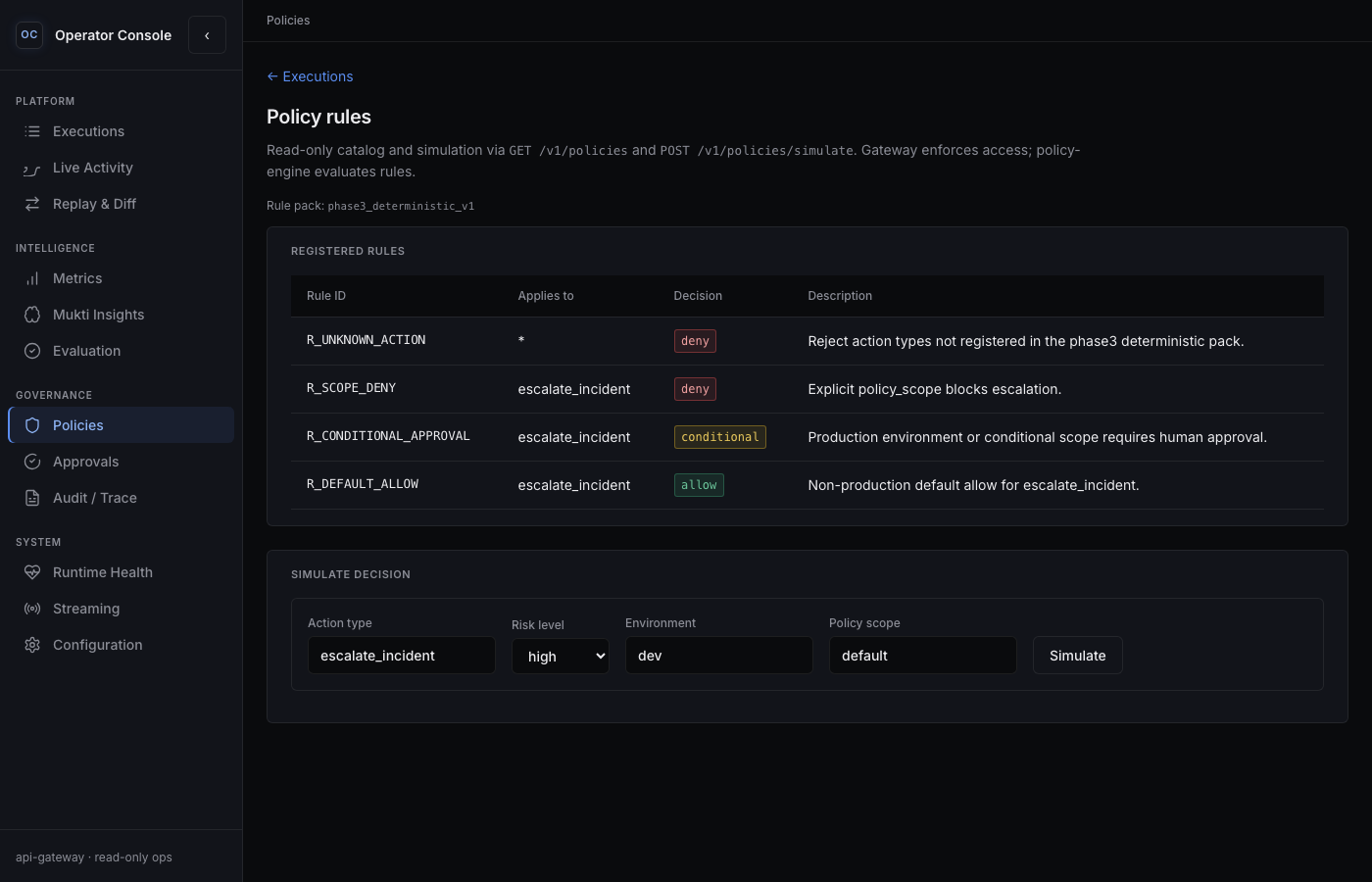
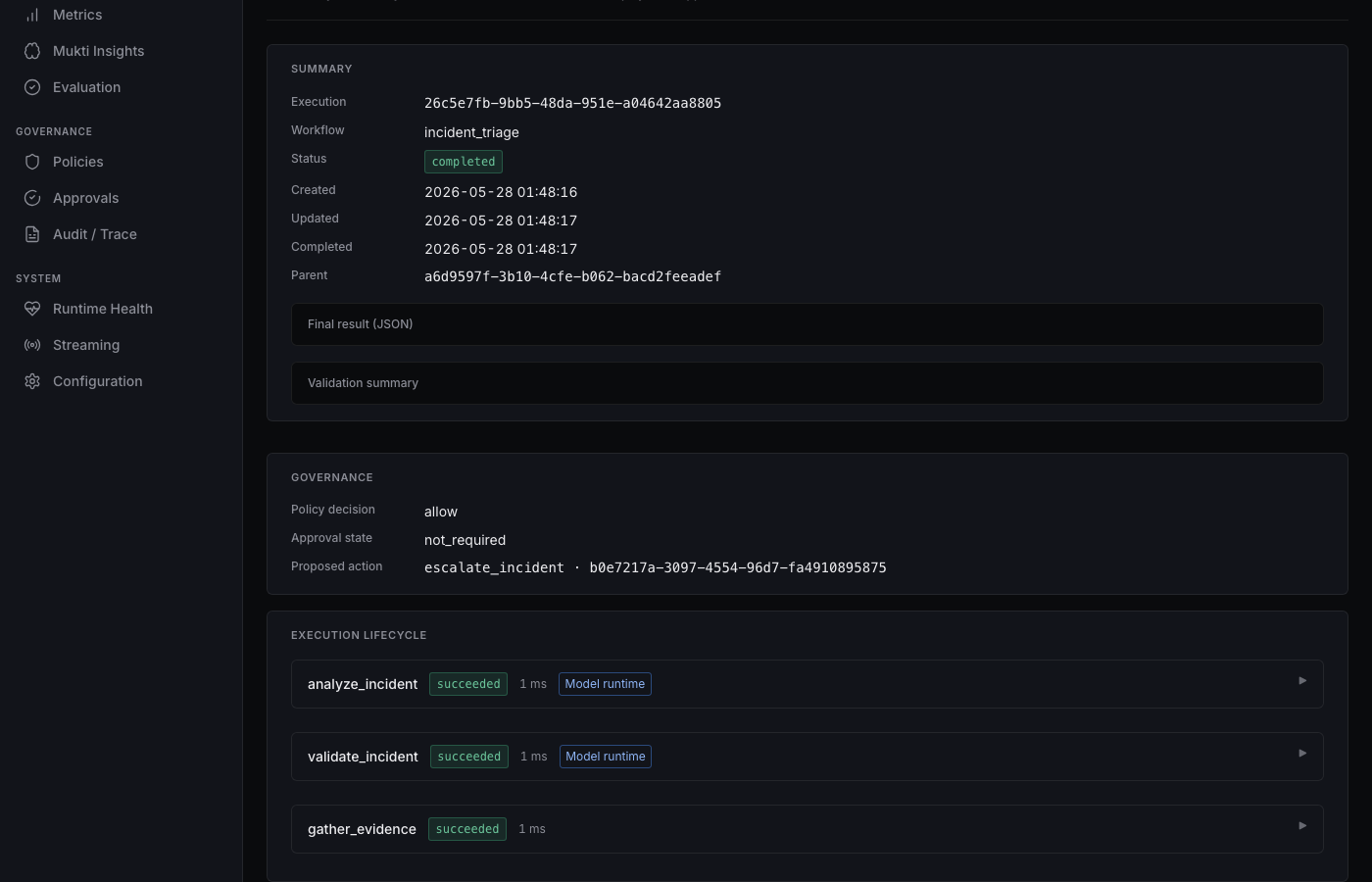
Policy-engine evaluates actions independently; high-risk operations can require recorded approval.
Tool runtime
Side effects flow through registered tools with typed contracts—not ad hoc HTTP from prompts.
Bounded model runtime
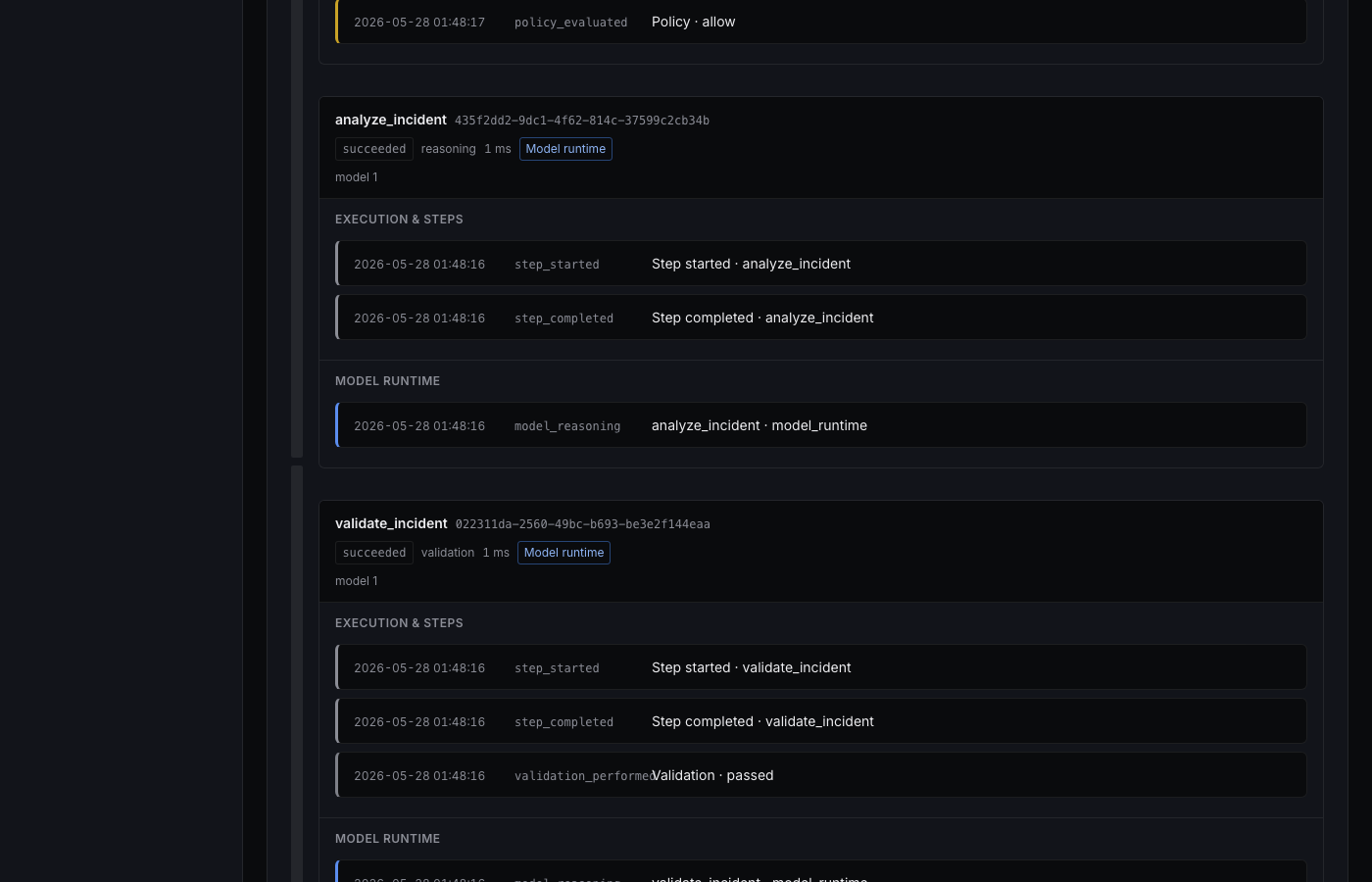
Models produce structured step outputs; they do not own execution state or transitions.
Knowledge / evidence retrieval
Retrieval steps ground answers with traceable corpus access before generation or action.
Replay and replay diff
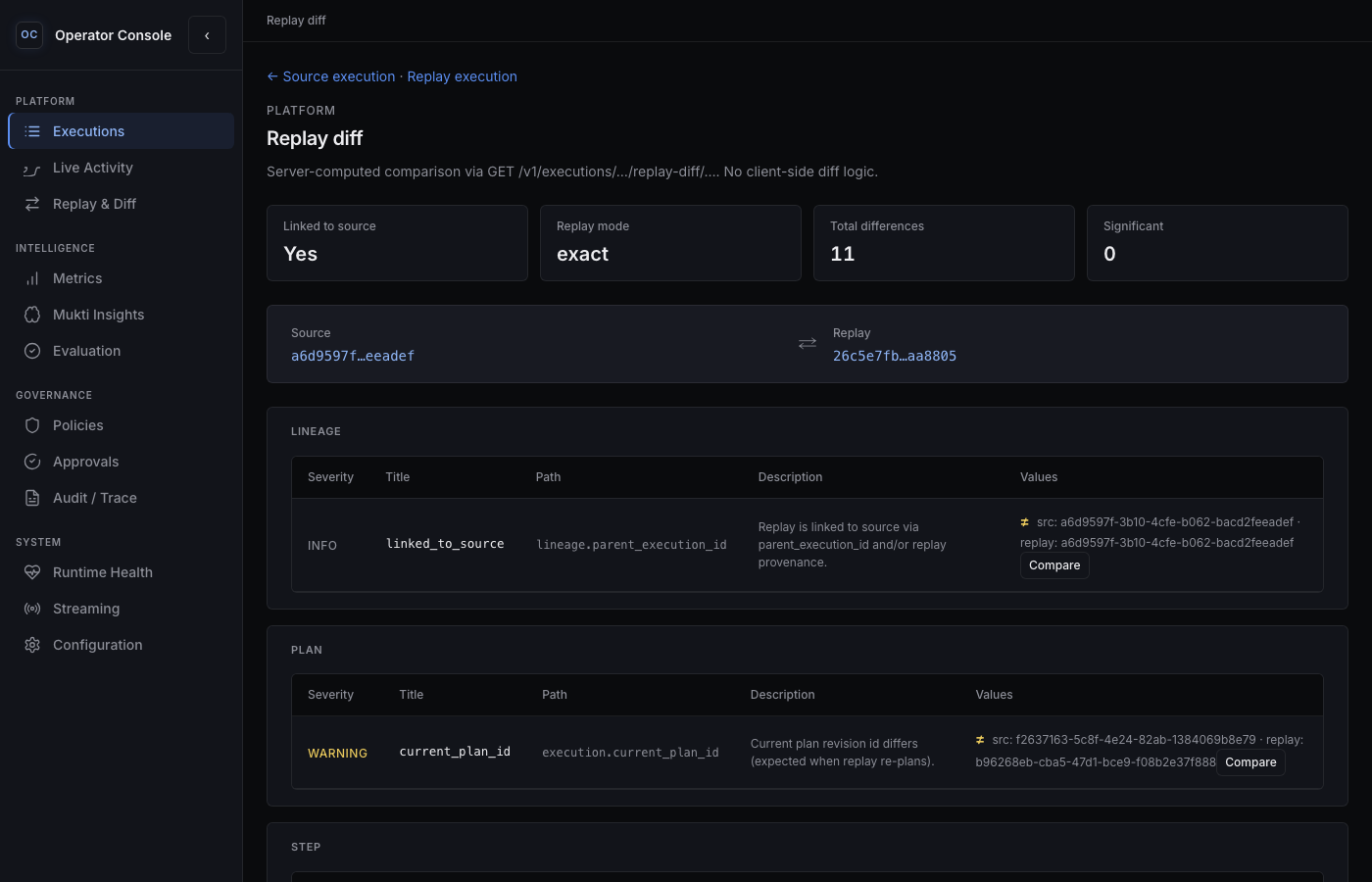
Source executions replay as children; evaluation-engine computes server-side diff categories.
Metrics and evaluation
Platform rollups and per-execution evaluation exposed via gateway projections.
Mukti insights
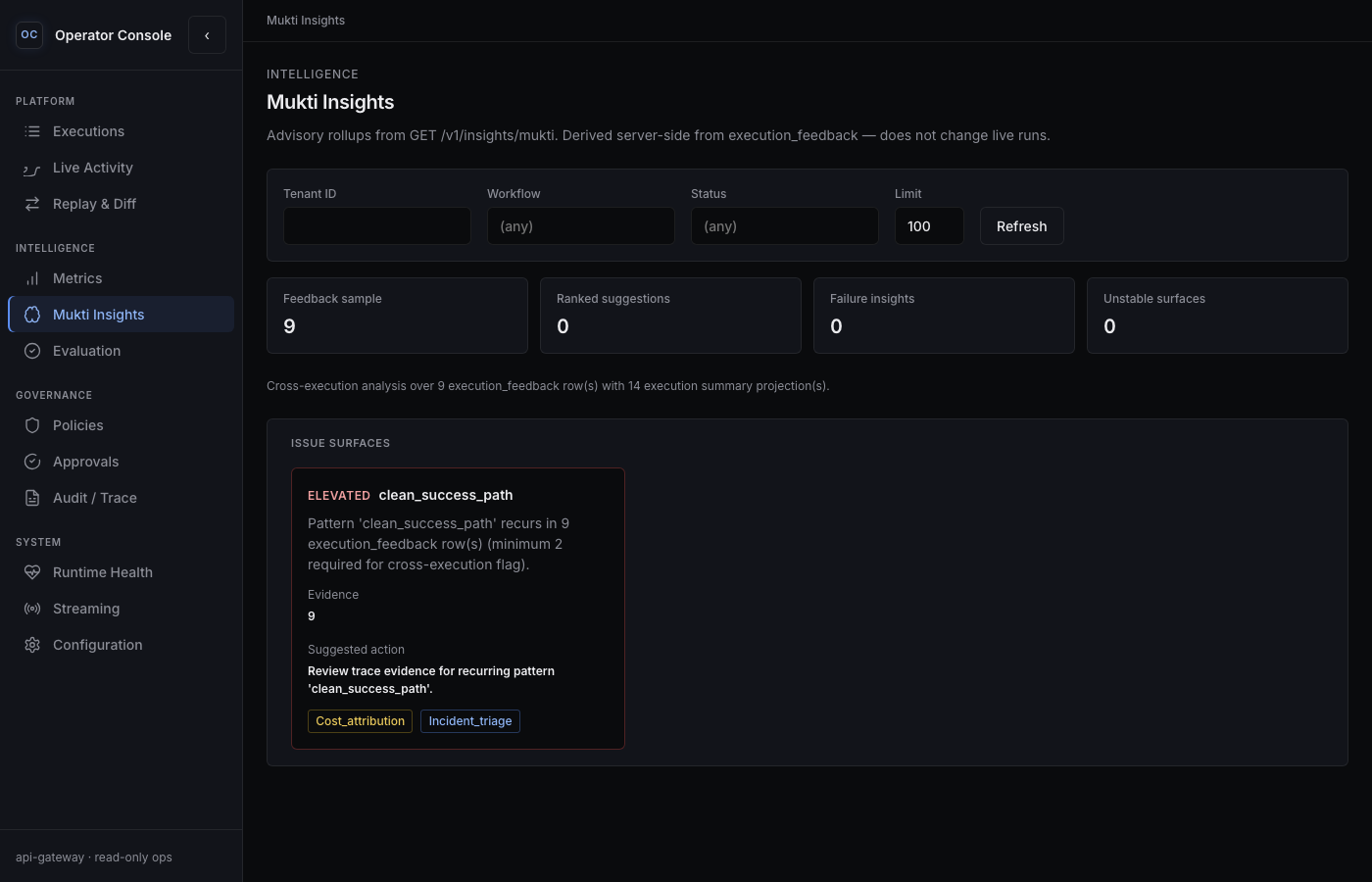
Cross-execution advisory cards from stored feedback—advisory only, no runtime self-modification.
Streaming operator console
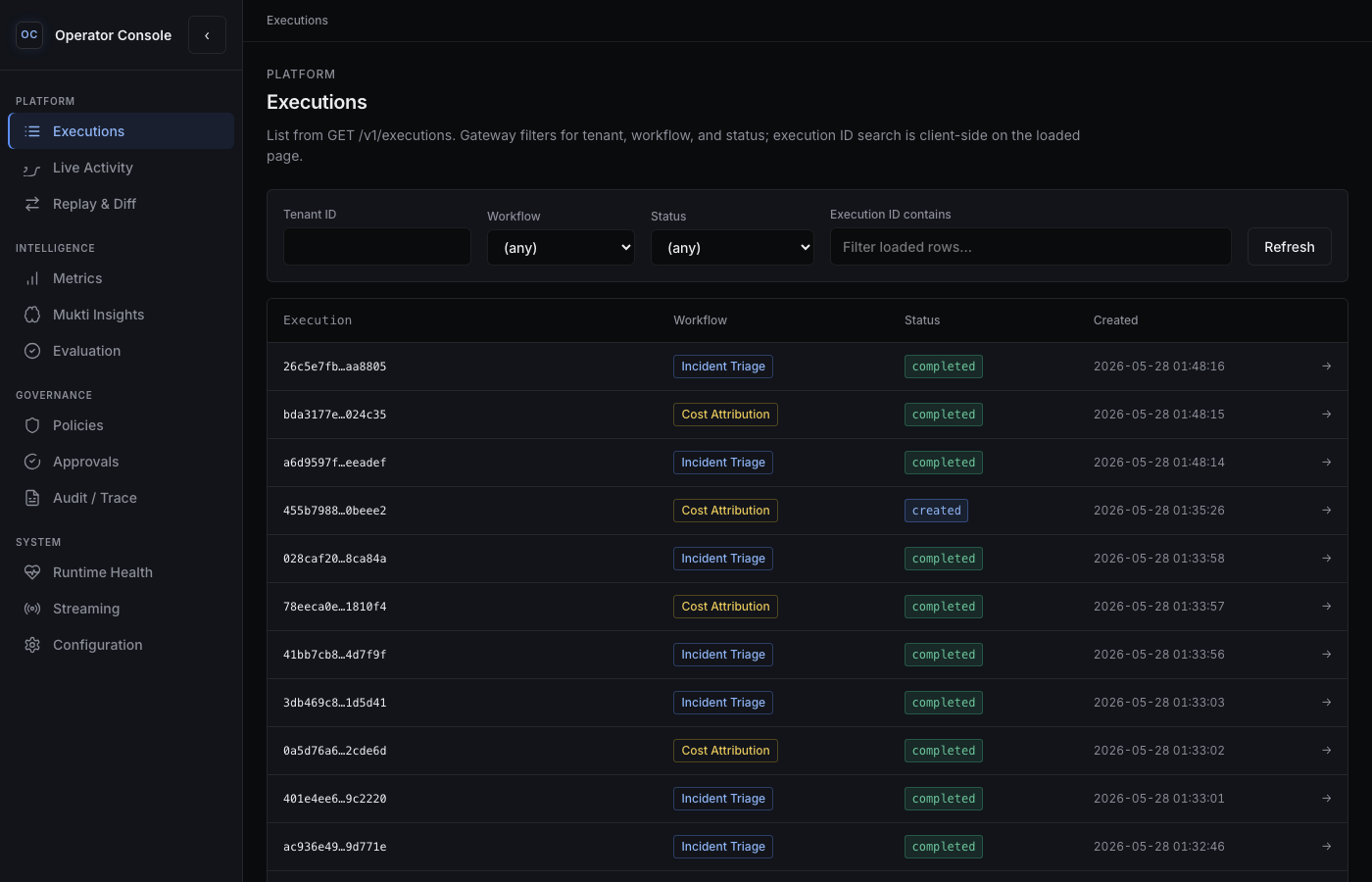
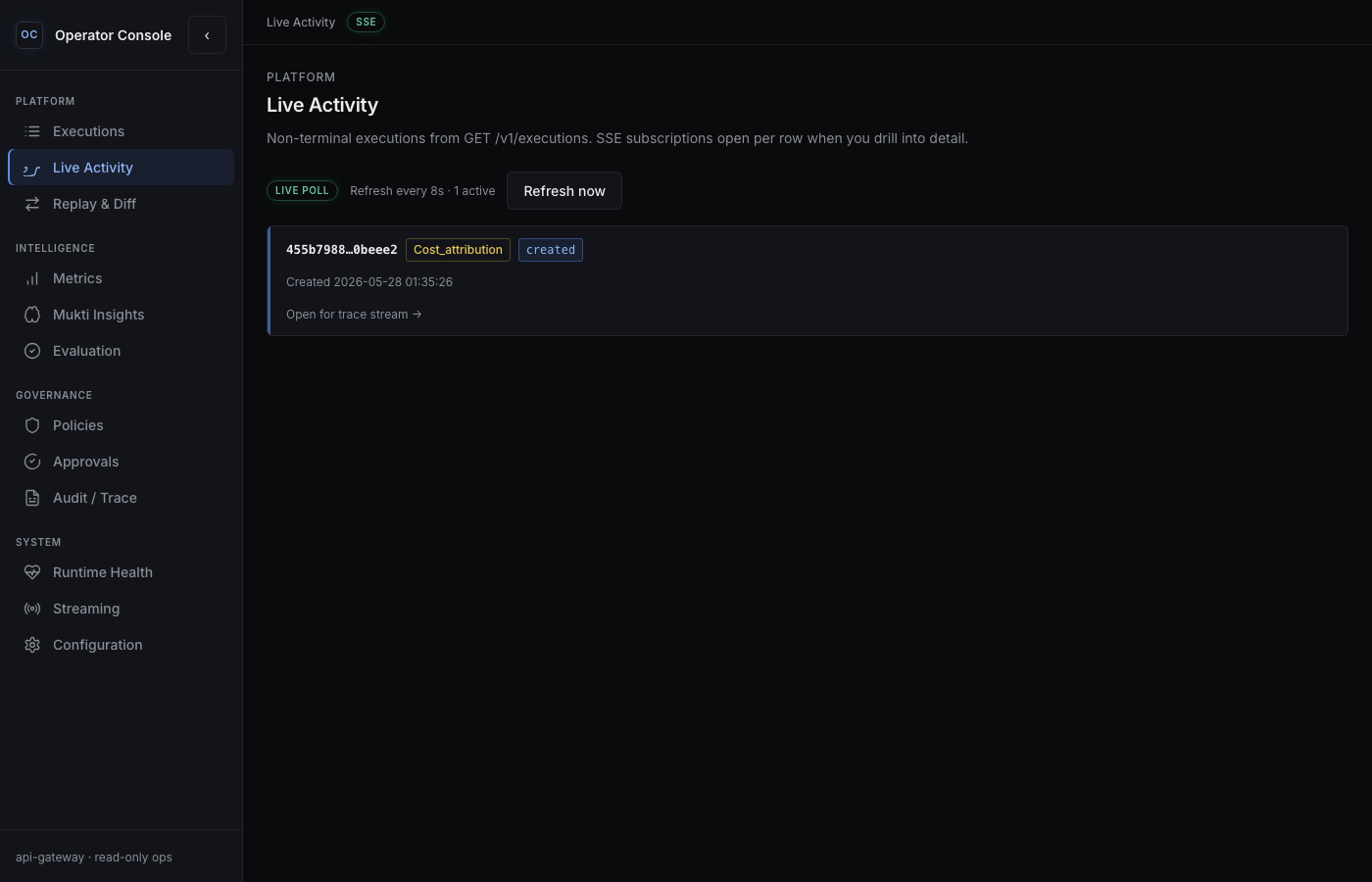
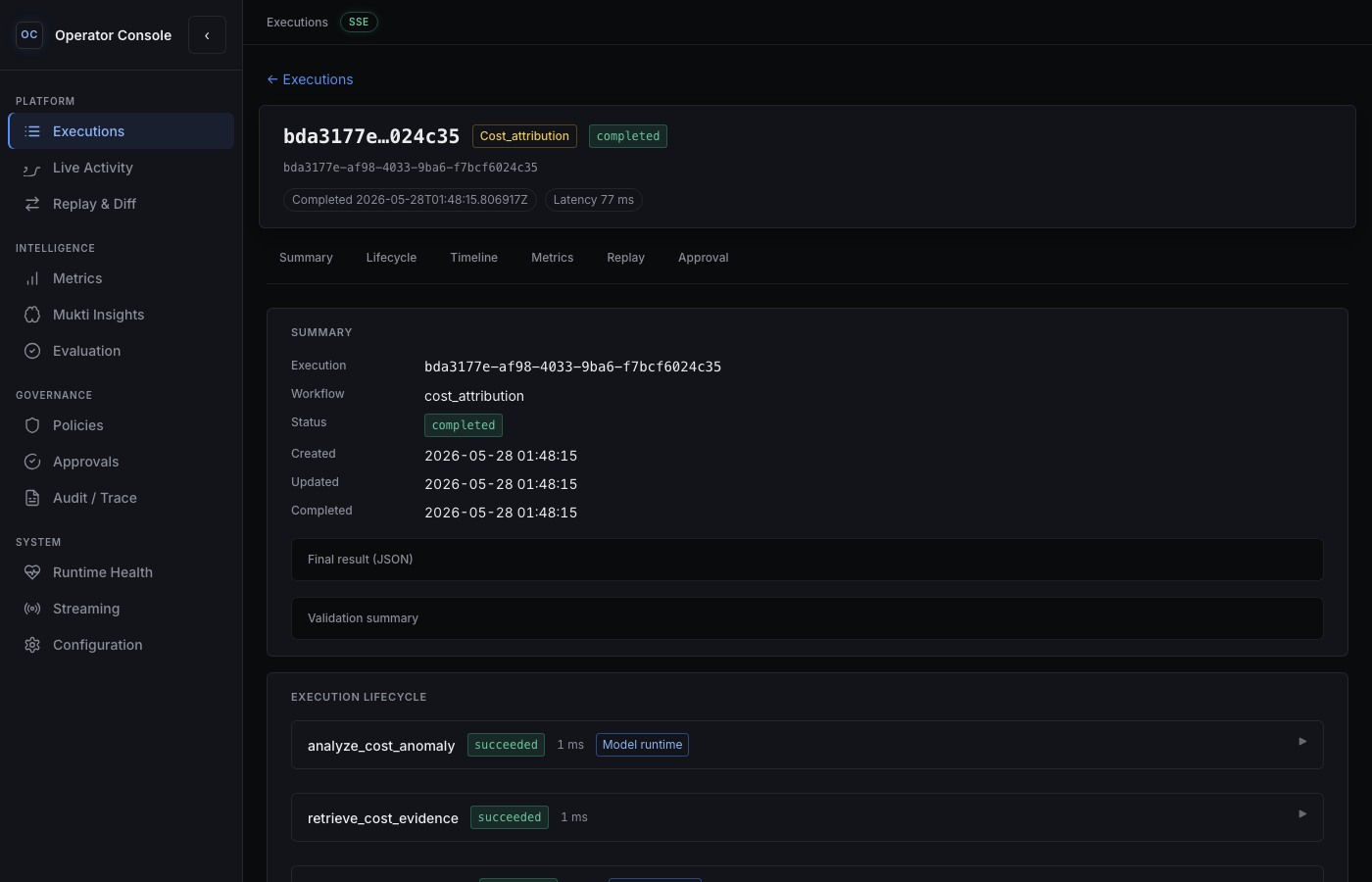
Live activity rail and SSE on active runs; grouped trace timeline and replay diff UX.
Reference workflows
Incident triage and cost attribution workflows seeded for local demo and investigation walkthroughs.
Operator console
Angular operator-console over api-gateway only: execution explorer, grouped trace timeline, replay diff, Mukti insights, policy simulation, and live activity. UI does not own execution semantics.
Why not LangChain / LangGraph as the execution engine?
- LangChain and LangGraph are useful for composing prompts, tools, and graphs in prototypes or bounded steps.
- This project keeps lifecycle, validation, replay, and policy semantics in the platform orchestrator—not in chain wiring.
- Execution state, policy evaluations, and tool calls are persisted and queryable; timelines are built from stored artifacts.
- Frameworks may be used at the edges inside a step where appropriate; they are not the system of record for execution.
Tradeoffs and limitations
- Local demo runs postgres, api-gateway, and operator-console; Python platform services are wired in-process inside the gateway image.
- Default model provider is fake for reproducible structured outputs without vendor API keys.
- Execution worker queue is in-process in local gateway configuration—not a separate broker service.
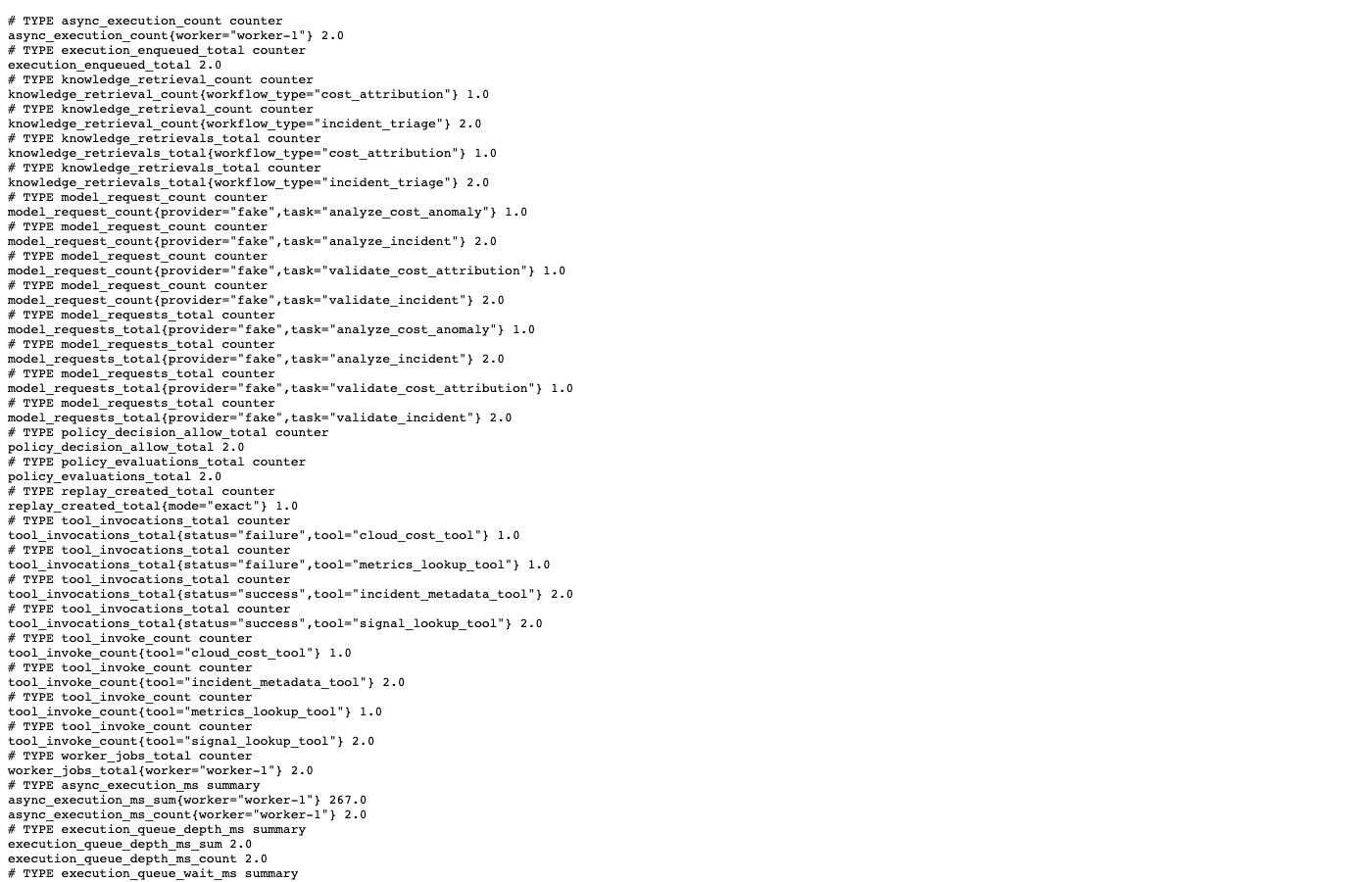
- Prometheus /metrics reflect the gateway process, not a full observability stack.
- Auth uses dev header fallback as a foundation—not enterprise OIDC.
- Not production HA or multi-region Kubernetes in this repository.
What this demonstrates
- AI platform architecture with separable policy, tools, models, and orchestration
- Deterministic control layer and explicit execution contracts
- Runtime systems thinking: retries, partial results, durable state
- Governance: policy evaluation and approval paths on the execution graph
- Observability: trace timeline, replay diff, metrics from stored artifacts
- Operational UX: operator-console over a thin gateway, not UI-owned semantics